
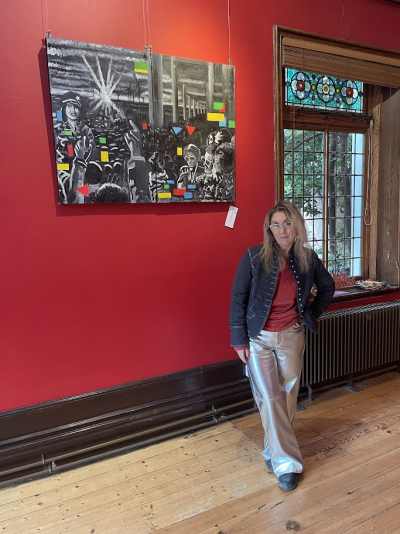
A Journey of Self-Worth and Resilience
I realised early on that becoming a commercial artist wasn’t a realistic path for me, given my lack of financial support and resources. Instead, I embraced the course as a means to boost my self-worth. Years of people putting me down and telling me I was inadequate had battered my confidence, compounded by the harrowing experiences I had faced as a child.
My professors noticed my financial struggles, but their advice often felt like a spinning top, making navigation difficult. My feedback was sometimes not taken seriously. I couldn’t help but feel I was there to pay someone’s wage, being young and lacking important contacts. I didn’t fit the stereotypical image of wealth, which may have led them to believe I didn’t need to invest much effort in my artistic growth.
Learning Self-Love vs. Marketable Commodities
The course gave me precious time to learn about self-love—a journey vital before you can truly love others. This process of self-discovery nurtured my soul, allowing me to heal and flourish.
However, the academic structure puzzled me. The course adhered to the conventional rule that an artist should draw and sketch ideas in a sketchbook and then transfer them to canvas. The pressure to find one’s style or to join a group of artists who all conform to a specific art form puzzled me, and I couldn’t help but wonder where these rules originated.
As I delved deeper, I noticed the underlying goal was to mould artists into tools for creating easily marketable art. Placing creativity into neatly defined boxes and labelling it for mass consumption felt stifling. The repetitive nature of making the same type of art until it became a marketable commodity left me unfulfilled. It was not the artistic path I envisioned from the beginning.
Embracing Artistic Versatility
During my time on the course, I refused to be confined to a single medium. I ventured into oil paintings, explored photography, dabbled in sculpture, and embraced the challenge of installations. It was an artistic odyssey where I chose versatility over a narrow niche.
Inspiration came from rebels like Andy Warhol, who challenged conventional notions of the individual artist, and the Surrealists, who viewed art as a means to explore philosophy and politics. These artists used their work as a platform for self-expression—a far cry from the stifling confines of a course that aimed to mould me into a commercial entity.
Youthful Oversights and Reflections
Like a typical teenager, I didn’t always preserve my work. I should have captured photographs of many pieces, but I lost some of my early creations in the hustle and bustle of moving houses. Looking back, those lost pieces were steps on a ladder toward my current practice.
As you embark on your own artistic journey, remember: “Art is what you make of it.” Don’t be swayed by those who say otherwise. Stay true to your unique path, marked by determination and a touch of rebellion.
—–
Here are some pages that dive deeper into how I reclaimed my artistic path and style:
-
Surrealism and Its Philosophy – The movement that helped me break the rules and redefine meaning.
-
Family Art Canvas – A piece that started commercial, then transformed into a protest.
-
A synopsis of my painting ‘Consumed.’ – Breaking free of market expectations.
-
Self Love – The journey to reclaim self-worth through creativity.